What Is Neutral Grain Spirit?
A clear, science-backed explanation of neutral grain spirit—what it is, how it differs from vodka, and why purity and low congener content matter.
Feb 9, 2026

Neutral grain spirit is one of the most important—and least understood—terms in alcohol.
Most people have never heard it. Most brands have no reason to explain it. And yet it sits quietly at the foundation of modern spirits, influencing purity, consistency, and how alcohol affects the body.
If we’re going to talk honestly about cleaner, lower-impact drinking, this is where the conversation has to start.
What a neutral grain spirit actually is
A neutral grain spirit—often abbreviated NGS—is ethanol distilled to very high purity, typically around 95–96% alcohol by volume, and stripped of nearly all congeners and flavor compounds.
By definition, a neutral grain spirit is colorless, odorless, flavorless, extremely consistent, and designed to function as a base ingredient rather than a finished product.
NGS is not a brand. It’s not vodka. It’s not Everclear, though Everclear is one consumer-available example of a high-proof neutral spirit. It is simply ethanol in its cleanest, most isolated, commercially drinkable form.
Ethanol vs. congeners: the critical distinction
To understand why neutral grain spirit matters, you need to separate two things that often get lumped together.
Ethanol is the molecule responsible for intoxication. It crosses the blood–brain barrier and determines blood alcohol concentration.
Congeners are the trace organic compounds created during fermentation, distillation, and aging—aldehydes, esters, fusel alcohols, phenols, tannins. They contribute the flavor, color, and aroma of traditional spirits. They do not increase intoxication. They do increase biological burden.
In simple terms: ethanol determines how drunk you get, and congeners determine how much your body pays for it afterward.
Dark spirits like brandy, whiskey, and rum contain significantly higher congener levels. Clear spirits contain less, but still vary widely depending on how they’re made.
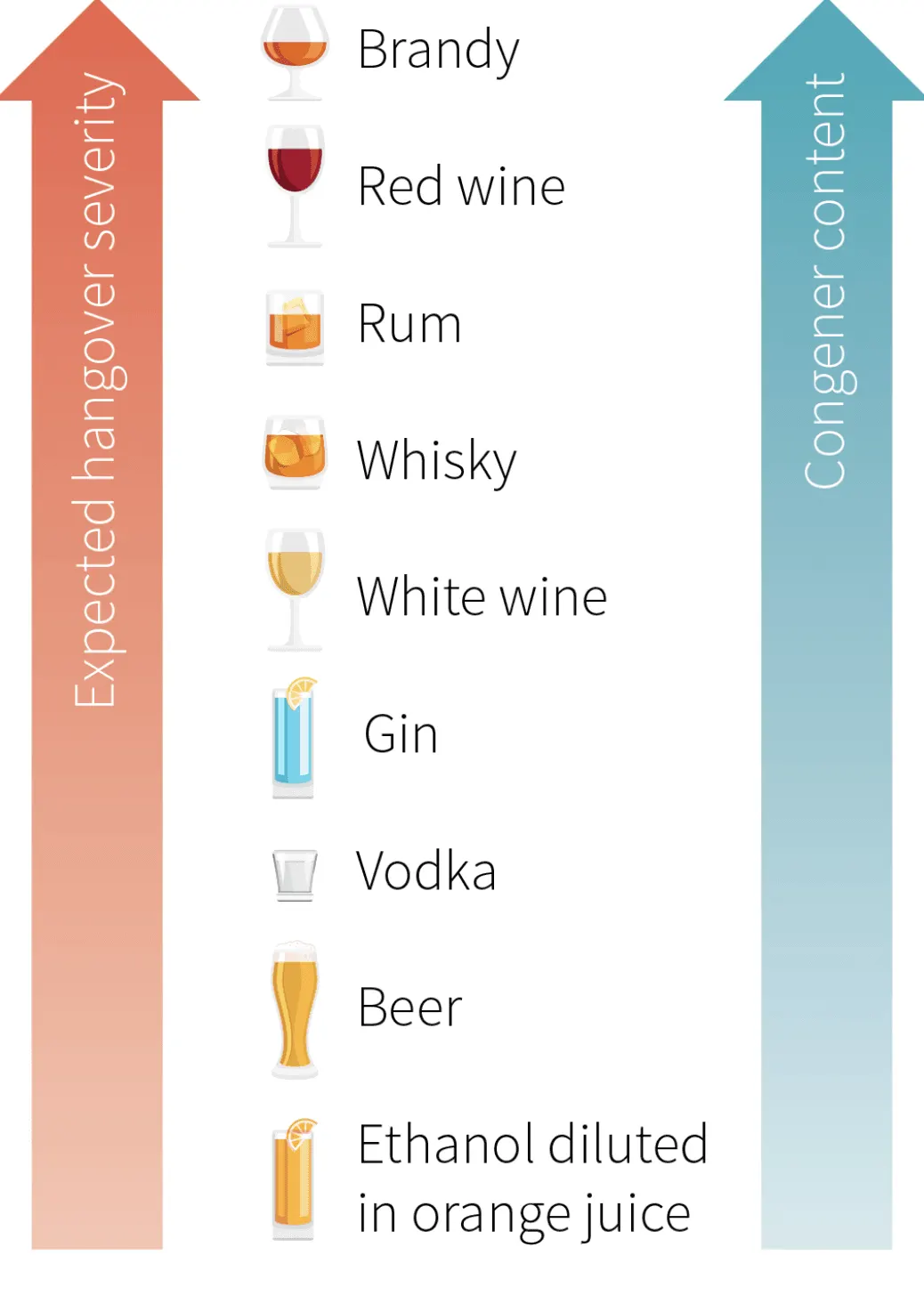
Neutral grain spirit sits at the extreme low end of that spectrum.
Why congeners matter more than people think
Research has repeatedly shown that beverages with similar ethanol content can produce very different next-day effects. The reason is congeners.
Higher congener loads are associated with increased inflammation, headaches and nausea, disrupted sleep, and greater perceived hangover severity. In controlled comparisons, pure ethanol diluted in juice consistently ranks among the lowest in expected hangover severity, even against vodka.
This isn’t because ethanol is harmless. It’s because removing unnecessary byproducts reduces total biological stress. That insight is foundational to how we design alcohol at SUNGOD.
Why neutral grain spirit is rarely talked about
The alcohol industry doesn’t reward transparency. Most brands aren’t required to list ingredients, benefit from mystique and tradition, rely on flavor and aging narratives, and optimize for cost and scale rather than purity.
Neutral grain spirit disrupts that story. It removes the romance and the mythology, and it asks a harder question: if the goal is a cleaner experience, why keep what isn’t necessary?
For spirits built around heritage and aging, congeners are part of the point. For a drink engineered for balance and low impact, they are not.
Why SUNGOD uses neutral grain spirit
We didn’t choose neutral grain spirit because it sounds clean. We chose it because it measures cleaner.
Using high-purity NGS lets us minimize total congener load, create predictable and repeatable outcomes, use less alcohol volume to reach the same ABV, reclaim space in the can for better water and real ingredients, and design around function instead of tradition.
In a 5% ABV beverage, that matters more than people realize. A vodka-based drink requires significantly more spirit volume to hit the same alcohol level, and that extra volume brings water, impurities, and unknown variability along with it.
Neutral grain spirit gives us control. It’s the first layer of what we call a Hardwater.
What neutral grain spirit is not
It is not a hangover cure. It is not a promise of health. It does not eliminate the effects of alcohol.
What it does is remove avoidable harm. It isolates the one molecule people actually want—ethanol—and allows everything else in the drink to be intentional, transparent, and engineered with care. That distinction is the entire point.
A new standard for alcohol design
Neutral grain spirit represents a shift in thinking: from tradition to function, from mystique to clarity, from “this is how it’s always been done” to “what actually works.”
It’s not the future of every spirit. But for alcohol designed around balance, transparency, and lower biological cost, it is the logical foundation.
That’s why we build with it. That’s why we explain it. And that’s why we’re comfortable owning the term. Because better drinking starts with better inputs.